What Does Microdosing a GLP-1 Mean?
GLP-1 microdosing means taking a smaller dose than the label allows, often on an irregular schedule, and nobody agrees on how small. Jeremy Korman, MD, a surgeon and obesity specialist at Cedars-Sinai, notes that wellness and weight loss companies often define it arbitrarily as 25 percent of a standard dose. Twenty-five percent of what, exactly? Nobody says.
The reasons people try it are easier to pin down. A 2026 brief report from George Washington University, published in the Journal of the American Association of Nurse Practitioners, names gastrointestinal tolerability and “vanity weight” as the drivers behind subtherapeutic microdosing, with affordability pushing patients toward medical spas and “research-grade” peptides sold online. Translation: the full dose makes people sick, costs too much, or feels like overkill for 15 pounds.
How Small Is a GLP-1 Microdose?
A GLP-1 microdose sits below the starting dose on the label, and the starting dose is already the lowest amount the approved regimens use. The Wegovy and Ozempic prescribing information both start semaglutide at 0.25 mg once weekly for 4 weeks. The Zepbound prescribing information starts tirzepatide at 2.5 mg once weekly for 4 weeks and states that the 2.5 mg dosage “is for treatment initiation and is not approved as a maintenance dosage.”
Those starter doses exist for your stomach, not your weight. Both the Ozempic and Zepbound labels say the slow escalation is there to reduce the risk of gastrointestinal adverse reactions. So a microdose is a fraction of a dose that was never meant to be the working dose in the first place.
Does Microdosing Work? What the Evidence Shows
There is no published clinical trial of GLP-1 microdosing, so nobody can honestly tell you it works. Velazquez at Cedars-Sinai puts it directly: “We don’t have any evidence that low-dose, intermittent use of GLP-1s provides meaningful or sustained weight loss or broader health benefits.” Joshua Neal, M.D., an obesity medicine physician at MUSC Health, said in April 2026: “I have not seen any data to support microdosing.” The longevity pitch that tops search results fares no better. “No one really knows at this point,” says Katy Williams, MD, of MU Health Care.
What the trials do show is that dose matters. In Zepbound Study 1, a 72-week trial of 2,539 adults without type 2 diabetes described in the Zepbound prescribing information, average weight change was minus 15.0 percent on 5 mg, minus 19.5 percent on 10 mg and minus 20.9 percent on 15 mg, against minus 3.1 percent on placebo. Less drug, less weight loss.
The closest thing to a real lower-dose study is SURMOUNT-MAINTAIN, published in The Lancet in 2026 and funded by Eli Lilly. Adults who had lost weight over 60 weeks on their maximum tolerated tirzepatide dose were randomized to stay on it, drop to 5 mg, or switch to placebo for another 52 weeks. At week 112, average weight change from baseline was minus 21.9 percent on the full dose, minus 16.6 percent on 5 mg and minus 9.9 percent on placebo. Rescue tirzepatide, offered after regaining more than half the lost weight, went to 8 percent of the full-dose group, 25 percent of the 5 mg group and 67 percent of the placebo group.
Read that trial carefully before anyone quotes it at you. Five milligrams is an approved Zepbound maintenance dose, not a microdose, and the step down happened under supervision with a branded product. It supports a conversation with your prescriber about a lower approved dose. It does not support a quarter-dose drawn from a vial.
The Safety Problems: Clicks, Vials and Compounders
The biggest risk in GLP-1 microdosing is measuring the dose, because the methods people use to get a small dose are the ones the manufacturers and the FDA warn against. Start with the pens. The Ozempic Instructions for Use say its 2 mg pen delivers doses “in 0.25 mg or 0.5 mg increments only” and tell you plainly: “Do not count the pen clicks.” The Zepbound KwikPen instructions are just as blunt: after 4 doses, “Do not inject the leftover medicine” and “Do not transfer ZEPBOUND from your Pen into a syringe.” Splitting a pen with a friend is out too, since both labels say a pen must never be shared between patients, even with a new needle.
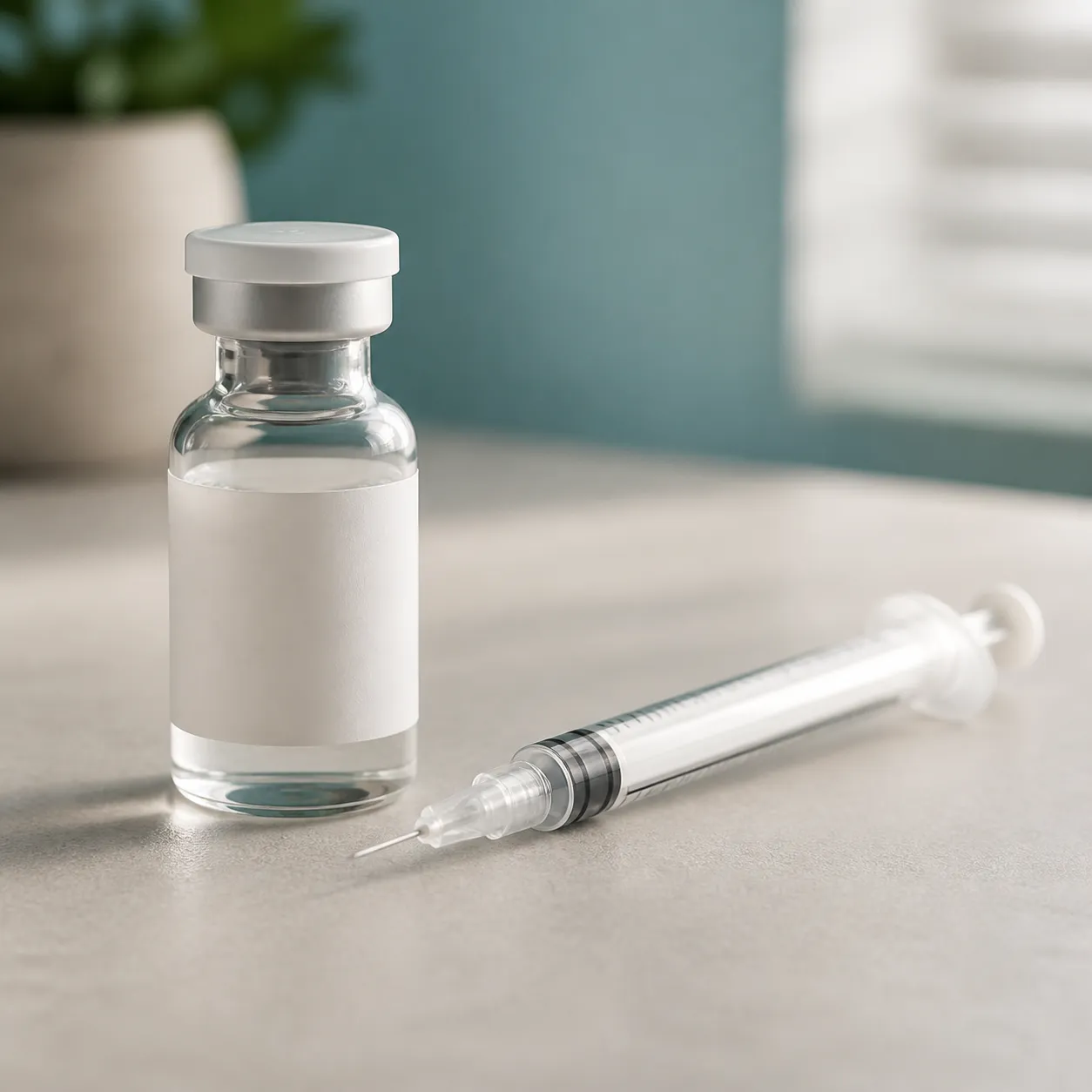
Vials are where the documented harm is. In July 2024 the FDA warned about dosing errors with compounded semaglutide sold in multiple-dose vials: patients confused milligrams, milliliters and “units,” some were told to draw small doses with a U-100 (1 milliliter) insulin syringe, and some ended up taking five to 20 times the intended dose. Reported problems included nausea, vomiting, fainting, dehydration, acute pancreatitis and gallstones, and some patients required hospitalization.
Then there is the product itself. The FDA declared the tirzepatide shortage resolved on December 19, 2024 and the semaglutide shortage resolved on February 21, 2025, and it states that “compounded drugs are not approved by FDA.” In February 2026 the agency said it intends to take action against non-FDA-approved GLP-1 drugs being mass-marketed by companies, compounding pharmacies included. Our compounded GLP-1 guide explains what that means for you.
Microdosing vs Label Dosing at a Glance
Label dosing and microdosing differ on almost every point that matters for safety, and the gap is widest on evidence. Every row below comes from a named source listed at the bottom of this page.
| Question | Label dosing | Microdosing |
|---|---|---|
| Who sets the dose | FDA-approved schedule, e.g. Wegovy starts at 0.25 mg weekly and steps up every 4 weeks | A clinic, a forum or you; no agreed amount |
| Tested in trials | Yes, including Zepbound Study 1 (2,539 adults) and the SURMOUNT-MAINTAIN 5 mg step-down | No published trial |
| Weight loss evidence | Dose-dependent: minus 15.0 to minus 20.9 percent at 72 weeks on Zepbound 5 to 15 mg | None, according to obesity specialists at Cedars-Sinai and MUSC Health |
| How the dose is measured | Pen or prefilled syringe that delivers a fixed dose | Counted clicks, leftover pen medicine, or a vial and syringe |
| Known measuring errors | Pen instructions tell you not to count clicks or transfer medicine | FDA reports of five to 20 times the intended dose from compounded vials |
| Product status | FDA-approved drug | Often compounded, which the FDA says is not FDA-approved |
Summarized from the prescribing information, FDA statements and published trial reports listed under Sources. Your prescriber decides which dose, if any, is right for you.
What to Ask Your Prescriber Instead
Whatever is pushing you toward microdosing, side effects, cost or fear of regain, has a supervised answer your prescriber can offer. For side effects, the Wegovy prescribing information already builds in flexibility: if you do not tolerate a dose during escalation, it says to consider delaying the next step for 4 weeks. The Zepbound label tells prescribers to weigh treatment response and tolerability when choosing a maintenance dose. Our guide to your first month on a GLP-1 and the GLP-1 side effects guide cover what the early weeks usually feel like.
For cost, ask about approved options and pricing before you ask about vials; our GLP-1 cost guide lays out what drives the price. For keeping weight off, the SURMOUNT-MAINTAIN authors suggest a lower approved dose might be a valuable alternative to stopping outright, and our guide to what happens when you stop a GLP-1 shows why that matters. More plain-language answers sit in our GLP-1 guides.
One rule covers all of it. Talk to your prescriber before changing your dose in either direction, and do not split, click or redraw a medication on your own.
Frequently Asked Questions
There is no medical definition of a GLP-1 microdose. Jeremy Korman, MD, an obesity specialist at Cedars-Sinai, says wellness and weight loss companies often define it arbitrarily as 25 percent of a standard dose. In practice it means less semaglutide or tirzepatide than the lowest dose on the label, which is 0.25 mg once weekly for Wegovy and Ozempic and 2.5 mg once weekly for Zepbound, and the Zepbound label says its 2.5 mg dose is for treatment initiation only.
GLP-1 microdosing has no published clinical trial behind it, so there is no evidence it is worth it. The trials that do exist show smaller doses doing less: in Zepbound Study 1, average weight change at 72 weeks was minus 15.0 percent on 5 mg and minus 20.9 percent on 15 mg. If cost, side effects or fear of regain is pushing you toward microdosing, raise that with your prescriber, because each has a supervised option.
Microdosing compounded semaglutide carries measurable risks. In July 2024 the FDA reported dosing errors with compounded semaglutide in multiple-dose vials, where patients took five to 20 times the intended dose after confusing milligrams, milliliters and units, and some needed hospital care. The FDA also states that compounded drugs are not FDA-approved, and it declared the semaglutide shortage resolved in February 2025.
Want a Dose Plan Built With a Clinician?
If side effects or cost have you thinking about microdosing, that is worth raising with a licensed clinician rather than a syringe. Licensed online programs include clinicians who can review your dose, your side effects and your goals, and adjust treatment within the approved labels.
Prescription required. Medical screening and clinician review required. Not all patients will qualify. Affiliate disclosure: this site may earn a referral fee from programs listed.
Compare Online GLP-1 ProgramsSources
The following sources were used for the dosing, trial, safety and regulatory information referenced on this page. Always verify against the most current version of each document.
- Wegovy (semaglutide) US Prescribing Information, Novo Nordisk: starting dosage 0.25 mg once weekly for 4 weeks, escalation every 4 weeks, delaying escalation for 4 weeks if a dose is not tolerated, and never sharing a pen between patients.
- Ozempic (semaglutide) US Prescribing Information and Instructions for Use, Novo Nordisk: initiation at 0.25 mg once weekly for 4 weeks, escalation to reduce gastrointestinal adverse reactions, pen doses in 0.25 mg or 0.5 mg increments only, and the instruction not to count pen clicks.
- Zepbound (tirzepatide) US Prescribing Information and Instructions for Use, Eli Lilly: 2.5 mg for treatment initiation only, maintenance chosen on response and tolerability, Study 1 results by dose, and KwikPen instructions not to inject leftover medicine or transfer it into a syringe.
- Horn DB et al. Tirzepatide for maintenance of bodyweight reduction in people with obesity in the USA (SURMOUNT-MAINTAIN). The Lancet, 2026: randomized maximum tolerated dose vs 5 mg vs placebo after 60 weeks of treatment; weight change at week 112 and rescue therapy rates. Funded by Eli Lilly.
- FDA alerts health care providers, compounders and patients of dosing errors associated with compounded injectable semaglutide products, July 2024: errors with multiple-dose vials, unit confusion, U-100 syringes, five to 20 times the intended dose, and reported adverse events.
- FDA clarifies policies for compounders as national GLP-1 supply begins to stabilize: tirzepatide shortage resolved December 19, 2024, semaglutide shortage resolved February 21, 2025, and the statement that compounded drugs are not approved by FDA.
- FDA intends to take action against non-FDA-approved GLP-1 drugs, February 2026: planned restrictions on mass-marketed compounded GLP-1 products.
- Trainer N. The microdosing dilemma: balancing patient anecdotes with clinical safety amid GLP-1 compounding restrictions. Journal of the American Association of Nurse Practitioners, 2026: brief report on the drivers of microdosing and the risks of pen manipulation, compounded vials and medication sharing.
- Cedars-Sinai: Can Microdosing GLP-1s Promote Health and Weight Loss?, May 2026: comments from Amanda Velazquez, MD, and Jeremy Korman, MD.
- MUSC Content Hub: Life after Ozempic: What happens when you stop a GLP-1?, April 2026: comments from Joshua Neal, M.D., on microdosing and lower maintenance doses.
- MU Health Care: Thinking About Microdosing GLP-1? 5 Myths Debunked, September 2025: comments from Katy Williams, MD, on low-dose benefits and compounded products.