Why Food Hits Differently on a GLP-1
Food feels different on a GLP-1 medication because the drug slows gastric emptying, and that is written into the label, not a rumor. The FDA prescribing information for Wegovy states that semaglutide delays gastric emptying, which is part of why you feel full sooner and stay full longer. The same mechanism explains the downside. A plate of fried food your stomach used to clear without comment now lingers, and nausea, reflux, or burping is how you find out.

The Wegovy label lists nausea, diarrhea, vomiting, constipation, and abdominal pain among its most common adverse reactions. Food choices will not erase those. They can turn a rough afternoon into a manageable one, though, and that is worth something. For the full list of side effects and the warning signs that need a call, see our GLP-1 side effects guide.
Foods to Avoid or Limit on GLP-1 Medications
The foods to avoid on a GLP-1 medication, according to the drug makers themselves, start with fat and grease. Eli Lilly's patient site for Zepbound tells people dealing with nausea to avoid fatty foods like butter or cheese, and Novo Nordisk's site for Wegovy lists eating greasy foods among the things to avoid. A 2025 joint advisory from the American College of Lifestyle Medicine, the American Society for Nutrition, the Obesity Medicine Association, and The Obesity Society goes wider, advising patients to avoid refined carbohydrates, sugar-sweetened beverages, red and processed meats, and most fast foods, ultraprocessed sweets, and savory snacks.
| Food or drink | Why it causes trouble on a GLP-1 | Try instead |
|---|---|---|
| Fried, greasy, fatty food | Eli Lilly and Novo Nordisk both name fatty or greasy food in their nausea tips; a slower stomach holds it longer. | Grilled, baked, or poached fish, chicken, tofu, or beans |
| Large portions | The 2025 joint advisory states that vomiting is more likely to occur with large meals. | Four or more smaller meals a day, per Eli Lilly's Zepbound tips |
| Sugary drinks and refined sweets | The joint advisory lists sugar-sweetened beverages, refined carbohydrates, and ultraprocessed sweets among foods to avoid. | Water, whole fruit, plain yogurt |
| Fast food and processed snacks | The joint advisory advises avoiding most fast foods and ultraprocessed savory snacks. | Minimally processed foods: vegetables, legumes, whole grains, nuts |
| Red and processed meats | Named on the joint advisory's avoid list. | Lean poultry, fish, eggs, legumes |
| Dairy, during diarrhea | Eli Lilly's Zepbound diarrhea tips say to limit dairy products. | Chicken broth, rice, or carrots, per the same tips |
| Alcohol | The joint advisory says alcohol may worsen nausea and reflux on GLP-1 therapy. | Water or a non-alcoholic drink; minimize, per the advisory |
Drawn from Novo Nordisk's Wegovy patient site, Eli Lilly's Zepbound patient site, and the 2025 joint advisory on nutritional priorities for GLP-1 therapy. Your prescriber's advice for your situation takes priority.
Notice what is missing. Spicy food turns up on nearly every GLP-1 list online, yet neither the Wegovy nor the Zepbound patient tips we reviewed name it. Same for fizzy drinks. If chili or carbonation sets you off, drop it. If it does not, you do not need a rule you read on a blog.
What to Eat Instead on a GLP-1
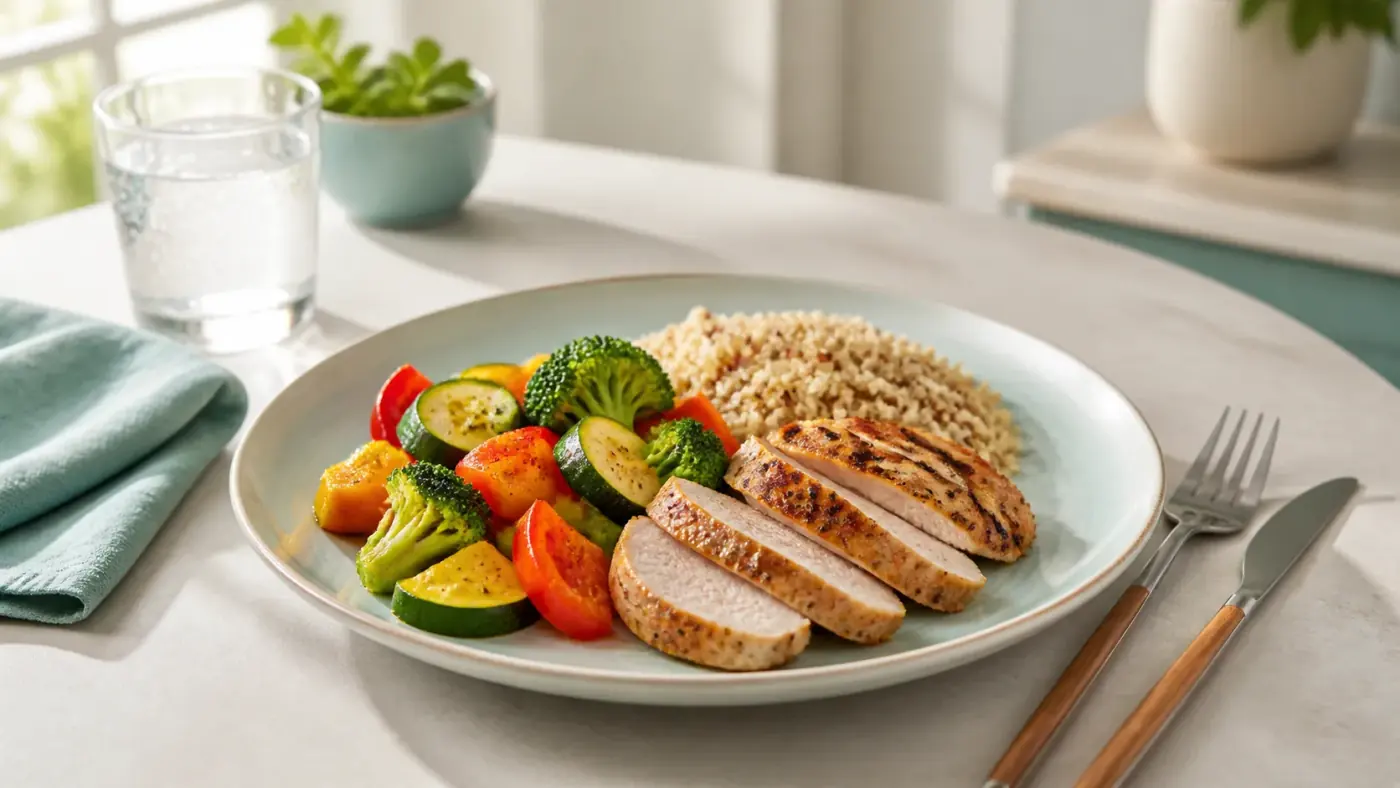
What to eat on a GLP-1 medication comes down to protein first, then minimally processed food, in smaller portions. The 2025 joint advisory recommends a diversity of nutrient-dense, minimally processed foods such as fruits, vegetables, whole grains, legumes, lean proteins, nuts, and seeds. Not exciting. It matters because you are eating less overall, so every bite carries more of the nutritional load.
Protein is the one people under-eat when appetite drops. The joint advisory cites the standard recommended daily allowance of 0.8 g of protein per kilogram of body weight, notes that higher targets of 1.2 to 1.6 g/kg/day have been proposed during active weight reduction, and offers a simpler absolute target of 80 to 120 grams a day. Practical translation: eat the protein on your plate first, before the bread gets its turn. Protein does its best work paired with strength training, which our guide to preventing muscle loss on GLP-1 medications explains.
One honest wrinkle. The same advisory notes that foods high in protein or fat can further slow gastric emptying, and that people with constipation may need to limit them temporarily. So protein-first is the default, not a law. If you are backed up and miserable, tell your prescriber instead of forcing down another chicken breast.
On bad-stomach days, go boring on purpose. Novo Nordisk suggests bland, low-fat foods like crackers, toast, and rice, plus foods that contain water such as soups and gelatin. Eli Lilly's Zepbound tips for diarrhea add chicken broth, rice, or carrots, at least 8 to 10 glasses of clear fluids a day, and less dairy. Do not skip the fluids: the Wegovy prescribing information reports acute kidney injury in patients whose nausea, vomiting, or diarrhea led to dehydration.
How You Eat Matters as Much as What
How you eat on a GLP-1 medication matters nearly as much as the menu, and portion size is the big one. The joint advisory says plainly that vomiting is more likely to occur with large meals. Eli Lilly's advice for Zepbound patients is to split three daily meals into four or more smaller ones and to stop eating when you feel full.
That last instruction sounds obvious. It is not. Decades of finishing the plate do not vanish because a new fullness signal showed up, and on a GLP-1 that signal can be quieter than you expect. Novo Nordisk adds two habits worth stealing: eat more slowly on purpose, and do not lie down right after a meal. If you are in your first weeks of treatment, our guide to your first month on a GLP-1 covers when these stomach issues tend to show up.
Alcohol on a GLP-1: Minimize It
Alcohol is the one drink the 2025 joint advisory singles out for GLP-1 patients: it says alcohol use may worsen nausea and gastroesophageal reflux with GLP-1 therapy and should be minimized. Minimized, not banned. A glass of wine at a wedding is a different question from three drinks every night, and the advisory does not pretend otherwise. For the risks that go beyond nausea, including pancreatitis and low blood sugar, see our guide to drinking alcohol on Ozempic and other GLP-1s.

If you have type 2 diabetes, bring alcohol up with your prescriber specifically, because the Wegovy label lists hypoglycemia as a common adverse reaction in patients with type 2 diabetes, and other glucose-lowering medications change the picture. More broadly, talk to your prescriber or a registered dietitian before any major diet change; the joint advisory calls for nutritional and lifestyle counseling before, during, and after the weight reduction period, not a list you found online. If your prescription comes through telehealth, our comparison of online GLP-1 programs notes which ones offer ongoing clinician follow-up.
Frequently Asked Questions
Greasy, fried, and high-fat foods top the list. Eli Lilly advises Zepbound patients with nausea to avoid fatty foods like butter or cheese, and Novo Nordisk lists greasy foods among the things to avoid on Wegovy. A 2025 joint advisory from four obesity and nutrition organizations also recommends avoiding sugar-sweetened beverages, refined carbohydrates, red and processed meats, and most fast food and ultraprocessed snacks. Large meals are a problem too, because vomiting is more likely after them.
The 2025 joint advisory from the American College of Lifestyle Medicine, the American Society for Nutrition, the Obesity Medicine Association, and The Obesity Society says alcohol may worsen nausea and gastroesophageal reflux with GLP-1 therapy and should be minimized. That is guidance to cut back, not a strict ban. If you have type 2 diabetes or take other glucose-lowering medication, ask your prescriber how alcohol fits your treatment.
The 2025 joint advisory cites the standard allowance of 0.8 g of protein per kilogram of body weight per day, notes that higher targets of 1.2 to 1.6 g/kg/day have been proposed during active weight reduction, and suggests an absolute target of 80 to 120 grams a day as a simpler option. Your prescriber or a registered dietitian can set the right number for your health, weight, and activity level.
Go bland and small. Novo Nordisk suggests bland, low-fat foods like crackers, toast, and rice, and foods that contain water such as soups and gelatin. Eli Lilly suggests toast, crackers, or rice, smaller and more frequent meals, and stopping when you feel full. Keep drinking fluids, and call your prescriber if nausea or vomiting keeps you from staying hydrated.
Eating Around a GLP-1 Is Easier With a Clinician in the Loop
A licensed clinician who knows your medical history can tell you which of these food rules matter for you and adjust treatment if side effects make eating hard. Licensed online programs provide that follow-up, including the prescription itself if treatment is appropriate.
Prescription required. Medical screening and clinician review required. Not all patients will qualify. Affiliate disclosure: this site may earn a referral fee from programs listed.
Compare Online GLP-1 ProgramsSources
The following sources were used for the food guidance, protein targets, and safety information referenced on this page. Always verify against the most current version of each document.
- Wegovy (semaglutide) US Prescribing Information, Novo Nordisk: delayed gastric emptying, common adverse reactions, and acute kidney injury associated with dehydration.
- Novo Nordisk, Wegovy patient site, side effects page: nausea management tips (bland low-fat foods, water-containing foods, avoiding greasy foods and lying down after eating).
- Eli Lilly, Zepbound patient site, side effects page: nausea and diarrhea tips (smaller meals, stopping when full, avoiding fatty foods, clear fluids, limiting dairy).
- Nutritional Priorities to Support GLP-1 Therapy for Obesity: A Joint Advisory from the American College of Lifestyle Medicine, the American Society for Nutrition, the Obesity Medicine Association, and The Obesity Society (May 2025).